


FWiW 93
July is another big month for sports in the United Kingdom. The weather is usually at its best, so everyone is either participating in or watching some major sporting event or just out and about enjoying the lesser-spotted British sun.
This month revolves around test cricket and golf. The Open Championship (this year at Royal Birkdale) always stands out as a highlight on my TV ‘Must Watch’ calendar.
The July edition of Rewound is packed with the above, with England continuing their battle against the then-mighty West Indians.
Plus, of course, the usual news, music, live gigs and other bits and pieces.
Enjoy.

What’s

this issue
- On This Day 📅
- Test Match Special 🏏
- The Open Championship ⛳
- Films Only 🎬
- Books 📚
- Almost Famous 🎤
- Yes, I am, The Record Collector ⏺
- Hello, I’m New Here 🎸
- Live Music 👨🎤
- UK Singles Charts 🙄
- UK Albums Chart 😮
- Music is my life… Trevor Pape 👴
- For the love of guitar 🎸
- Coming in August 🤙
“When its November I’ll think of July, Where the sunshine will fly though a warm sky” Wandering by Frank Sinatra (1968)

2 July
During the Use Your Illusion Tour, Axl Rose, assaults a member of the audience watching the show on camera after security fails to respond to the singer’s orders to confiscate the camera. After the attack, Rose angrily says, “Thanks to the lame-ass security, I’m goin’ home!” and storms off the stage.
8 July
Two IRA suspects seize their opportunity while leaving a church service and shoot their way out of Brixton Prison in London. Pearse McAuley and Nessan Quinlivan then steal a prison officer’s car before fleeing back to the Republic of Ireland.
🌘
11 July
A total eclipse happens over the Pacific Ocean, which can be seen over Hawaii and then South America. The moon blocks the sun for a total of 6 minutes, making it the longest duration of an eclipse on record.
and
Nigeria Airways Flight 2120 catches fire and crashes soon after taking from Jeddah, Saudi Arabia. All 261 people on board are killed.
🎹
13 July
Pianist Keith Jarrett records his Vienna Concert at the Vienna Staatsoper.

18 July
Perry Farrell launches the first Lollapalooza tour as a farewell for his just-dissolved band, Jane’s Addiction. Other acts appearing on the tour include Siouxsie and the Banshees, Nine Inch Nails, Rollins Band, Fishbone and Rage Against the Machine.


What lollapalooza means?
informal• North American
noun: a person or thing that is particularly impressive or attractive.
“it’s a lollapalooza, just like your other books“

🥊
22 July
Mike Tyson is arrested for the rape of Desiree Washington, a former Black America contestant, three days earlier.
and
In Milwaukee, Wisconsin the remains of 11 men and boys are found in Jeffrey Dahmer’s apartment by police. The serial killer goes on to confess to murdering 17 young men.

“The pitch will be green and the weather will be unpredictable, but that’s what makes July cricket in England so exciting.” Neville Cardus


Test # 1173 (of all time)
3rd Test, Nottingham, July 04 – 09, 1991, West Indies tour of England continues.


The umpires were John Hampshire and Mervyn Kitchen, both of England.
David Lawrence was recalled, nearly three years after winning his first cap, and Richard Illingworth, twelfth man at Headingley and Lord’s, came in to make his début.


The England team: Gooch (captain), Atherton, Hick, Lamb, Ramprakash, Smith, Jack Russell (wicket keeper), Pringle, DeFreitas, Illingworth, Lawrence.

West Indies stayed with their Lord’s XI after Patterson failed to last the match against Hampshire.
The West Indies team: Simmons, Haynes, Richardson, Hooper, Richards (captain), Logie, Dujon (wicket keeper), Marshall, Ambrose, Walsh, Allen.
England won the toss and chose to bat

England 1st innings: 300 (Graham Gooch 68, Robin Smith 64 not out, Graeme Hick 43)(Curtly Ambrose 5/74, Malcolm Marshall 2/54, Ian Allen 2/69)

West Indies 1st innings: 397 (Viv Richards 80, Gus Logie 78, Malcolm Marshall 67)(Phil de Freitas 3/67, Richard Illingworth 3/110)

England 2nd innings: 211 (Phil de Freitas 55 not out, David Lawrence 34)(Courtney Walsh 4/64, Curtly Ambrose 3/61)
West Indies 2nd innings: 115/1 (Desmond Haynes 57, Richie Richardson 52)
WEST INDIES won by 9 wickets to level the series at 1-1.
🏏
Player of the Match: CURTLY AMBROSE


👇
https://www.espncricinfo.com/story/england-v-west-indies-1991-152044

Test # 1174
4th Test, Birmingham, July 25 – 28, 1991, West Indies tour of England continues

The umpires were Barry Dudleston and David Sheppard, both of England.
England made two changes from the previous test. Hugh Morris, making his test debut, replaced the injured Robin Smith. Chris Lewis replaced David Lawrence. The selectors again chose to leave out the now available Ian Botham.
The West Indies brought back the fit again fast bowler, Patrick Patterson, to replace the medium pace of Ian Allen.

England 1st innings: 188 (Graham Gooch 45, Mark Ramprakash 29)(Malcolm Marshall 4/43, Curtly Ambrose 3/64, Courtney Walsh 2/43)
West Indies 1st innings: 292 (Richie Richardson 104, Carl Hooper 31) (Chris Lewis 6/111)
England 2nd innings: 255 (Chris Lewis 65, Derek Pringle 45, Graham Gooch 40)(Patrick Patterson 5/81, Curtly Ambrose 2/42, Malcolm Marshall 2/53)
West Indies 2nd innings (Target = 152 runs): 157/3 (Viv Richards 73 not out, Carl Hooper 55 not out)(Phil de Freitas 3/54)
West Indies won by 7 wickets and now lead the series 2 – 1.

Man of the match: Richie Richardson
Attendance: 59,917; receipts £852,868.
👇
https://www.espncricinfo.com/story/england-v-west-indies-1991-153167
🏏
“Its far more than a game, this cricket“ Neville Cardus

As a young boy, through my teens and into my early thirties, I was pretty much a cricket addict. I lived, ate, and slept the great game. When I wasn’t playing or practising (usually every day of the week), I was lying on my bed reading about all the batting and bowling exploits you can imagine.
Cricket was my cool band – well, okay, my alternative band, and an early source of the rewarding illusion of individuality that was still possible in a predigital world.
The Wisden Cricket Almanack was my bible. I picked up several of those thick yellow annual books they published. They were filled with the scores of every game played around the world in that particular calendar year. In those pre-internet days, it was the only way to educate and inform yourself about who was who and what was what in the wide world of cricket.

It all feels precise and vivid, from that lovely period between the ages of 12 and say 30, when memories take out a long-term lease in the brain. Unlike now when they tend to vanish within hours, even minutes, of the experience.

I also subscribed to the Wisden Cricket Monthly version, a glossy magazine filled with scorecards, news on the latest tours, interviews, and match reports. Every few weeks I would be hounding the poor folk at our local CNA in Alberton to see if the most recent edition had made its way off the boat yet.
Almost thirty-five years later, when every experience is shared whether you like it or not, that homespun life of old, is something to cherish – and to revisit, via the DeLorean of YouTube – or if you are lucky enough to still have them, one of these little yellow books.

Later in 1991 I’d be thrilled to hear that South Africa would be returning to the international cricket fold after two decades in the wilderness. They we were due to tour India and play three one-day internationals against the powerful Indians.
It was so exciting!! I had waited almost a lifetime for this, and had long dreamed of the day we would be allowed back into the ICC. I had been four years old, when we had last played an official test match against Australia, in 1970.
This would be another reason I couldn’t wait to get home and decided against staying in Ireland into 1992. But … more of that later.

“Golf is a game whose aim is to hit a very small ball into an even smaller hole, with weapons singularly ill-designed for the purpose.” Winston Churchill

The 1991 Open Championship was the 120th Open, held from 18 to 21 July at Royal Birkdale Golf Club in Southport, England.
This Open always makes me think of Ian Baker-Finch, the nerdy-looking Australian dude with the specs. This Championship coming not long before he contracted the dreaded putting yips that would eventually force an early retirement of the poor man.

First Round
Seve Ballesteros, the Spanish links maestro, opens on the Thursday with a scintillating 66. One shot further back were Chip Beck (USA), Santiago Luna (Spain), and Martin Gates (England).


Second Round
Ballesteros falls back into a tie for fourth place after shooting a disappointing 73. Into a tie for first place come Gary Hallberg (USA)(68+70=138), Mike Harwood (Australia)(68+70=138), and Scotland’s Andrew Oldcorn (71+67)

Weekend
On Saturday, Richard Boxall (of England and in 10th place) had the misfortune to break his leg while hitting his drive at the ninth.
Ian Baker-Finch, after two quiet rounds of 71, played spectacular golf when it mattered – the weekend
Baker-Finch set a new course record for Royal Birkdale with a 64 in the third round, which he promptly lost the next day when Jodie Mudd became the fifth player in The Open to score a 63.
He had recorded nine threes and finished with an eagle and a birdie to tie for the lead with American Mark O’Meara.

Eamonn Darcy (Ireland) and Mike Harwood (Australia) were tied third.
Ian Baker-Finch had twice before been in the final pairing on Sunday in The Open, both times at St Andrews. In 1984 he hit his approach into the Swilcan Burn at the first on the way to a 79, while in 1990 he had a 73 as Nick Faldo cruised to victory.

This time the Australian was ready to win. He picked up where he had left off the previous day by starting the final round with five birdies in the first seven holes.

He went out in 29 and went on to beat fellow Aussie Mike Harwood by two strokes, with Americans O’Meara and Fred Couples sharing third place. With a closing 66, Baker-Finch equalled Tom Watson’s record of 130 strokes for the last 36 holes set in 1977.

“All the times I didn’t go on and win made me stronger,” Baker-Finch said. “Today erases all those memories. Just to play in The Open is fantastic, to win it is a dream.”
Place Player Score To par Money (£)
1 Ian Baker-Finch 71-71-64-66=272 −8 (90,000)
2 Mike Harwood 68-70-69-67=274 −6 (70,000)
T3 Fred Couples 72-69-70-64=275 −5 (55,000)
Mark O’Meara 71-68-67-69=275 -5 (55,000)
T5 Eamonn Darcy 73-68-66-70=277 −3 (34,167)
Jodie Mudd 72-70-72-63=277 -3 (34,167)
Bob Tway 75-66-70-66=277 -3 (34,167)
8 Craig Parry 71-70-69-68=278 −2 (27,500)
T9 Seve Ballesteros 66-73-69-71=279 −1 (22,833)
Bernhard Langer 71-71-70-67=279 -1 (22,833)
Greg Norman 74-68-71-66=279 -1 (22,833)
Everybody has something that chews them up and, for me, that thing was always loneliness. The cinema has the power to make you not feel lonely, even when you are. (Tom Hanks)


In this sequel set eleven years after “The Terminator,” young John Connor (Edward Furlong), the key to civilization’s victory over a future robot uprising, is the target of the shape-shifting T-1000 (Robert Patrick), a Terminator sent from the future to kill him. Another Terminator, the revamped T-800 (Arnold Schwarzenegger), has been sent back to protect the boy. As John and his mother (Linda Hamilton) go on the run with the T-800, the boy forms an unexpected bond with the robot.


The critics had this to say:
Terminator 2 features thrilling action sequences and eye-popping visual effects, but what takes this sci-fi/ action landmark to the next level is the depth of the human (and cyborg) characters. One of the best franchise sequels ever made. (Dennis Harvey)
[Cameron’s] showmanship is legendary, his capacity for orchestrating mayhem unparalleled. And Terminator 2: Judgment Day is a prime example. (Brian Eggert)
📽
Mark’s

I remember seeing this for the first time and loving it! What made it even more special is that the occasion was also a date with Donaghadee’s lovely Susan Fraser, somewhere in Belfast. It was the first time I had ever seen one of those double seated ‘love seats’ at a cinema. So, I got to snuggle up nice and close, to the gorgeous Irish lass of my dreams – and – watch Roddy Doyle’s fabulous novel come to life on the big screen at the same time.
I have since seen the Commitments on many occasions and now count it as one of my favourite musical films ever.
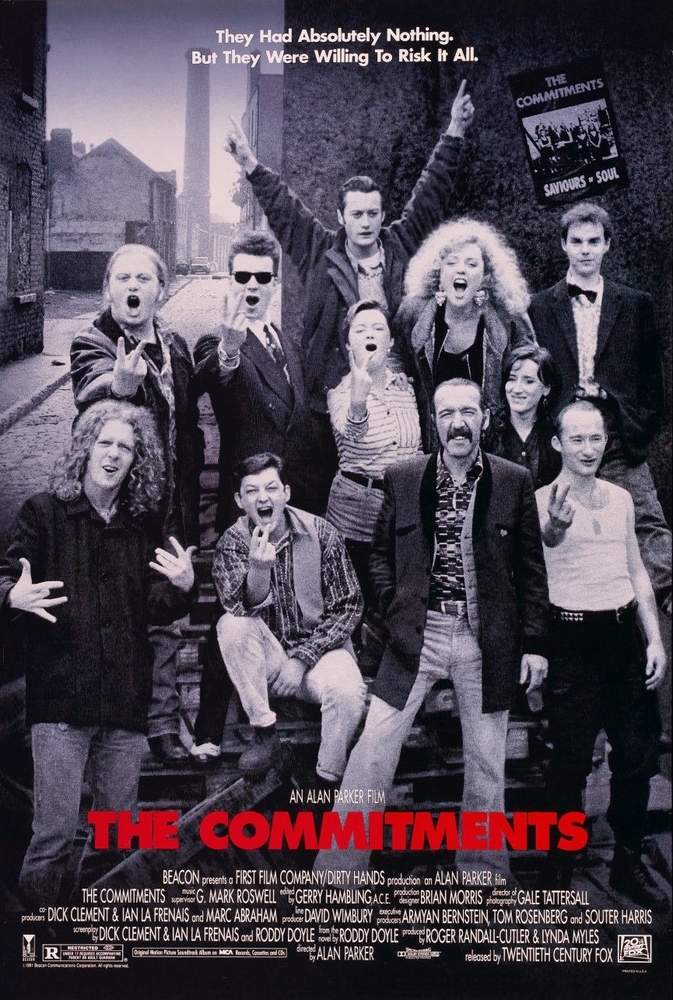

The Commitments is a musical comedy-drama film based on the 1987 novel of the same name by Roddy Doyle. It was directed by Alan Parker from a screenplay written by Doyle, Dick Clement and Ian La Frenais. Set in the Northside of Dublin, the film tells the story of Jimmy Rabbitte (Robert Arkins), a young music fanatic who assembles a group of working-class youths to form a soul band named “The Commitments.”
Rabbitte, a self-proclaimed promoter, decides to organize an R&B group to fill the musical void in his hometown of Dublin, Ireland. The band comes together but ends up consisting entirely of white musicians who have little experience with the genre. Even though their raw talent and lofty aspirations gain the group notoriety, the pitfalls of fame began to tear at their newfound friendships as they prepare for their big show.
The film is the first in a series known as The Barrytown Trilogy, followed by The Snapper (1993) and The Van (1996). (Wikipedia)

The Commitments received mostly positive reviews. Review aggregator Rotten Tomatoes sampled 48 reviews, and gave the film an approval rating of 90%, with an average score of 7.4/10. The critical consensus reads, “The Commitments is a vibrantly funny and blissfully heartfelt ode to the power of music.” It is also ranked sixth on the website’s best reviewed films of 1991.


Now Showing
Point Break
Bill & Ted’s Bogus Adventure
Regarding Henry
Slacker
Mobsters
Hot Shots!
“There is more treasure in books than in all the pirate’s loot on Treasure Island.” (Walt Disney)

of the Month
Bone, Vol. 1: Out from Boneville by Jeff Smith
After being run out of Boneville, the three Bone cousins, Fone Bone, Phoney Bone, and Smiley Bone, are separated and lost in a vast uncharted desert.
One by one, they find their way into a deep, forested valley filled with wonderful and terrifying creatures…

Humour, mystery, and adventure are spun together in this action-packed, side-splitting saga. Everyone who has ever left home for the first time only to find that the world outside is strange and overwhelming will love Bone.

The Kitchen God’s Wife by Amy Tan
The Kitchen God’s Wife is the second novel by Chinese-American author, Amy Tan. It deals extensively with Chinese-American female identity and draws on the story of her mother’s life.

Winnie and Helen have kept each other’s worst secrets for more than fifty years. Now, because she believes she is dying, Helen wants to expose everything. And Winnie angrily determines that she must be the one to tell her daughter, Pearl, about the past—including the terrible truth even Helen does not know. And so begins Winnie’s story of her life on a small island outside Shanghai in the 1920s, and other places in China during World War II, and traces the happy and desperate events that led to Winnie’s coming to America in 1949.
“Fame, bully for you chilly for me, Got to get a rain check on pain, (pain)” Fame by David Bowie (1975)
This month in…

Courtney Michelle Love (née Harrison; born 9th of July 1964) is an American singer, guitarist, songwriter, and actress. She is the lead vocalist and rhythm guitarist of the alternative rock band Hole, which she formed in 1989.

Love had an itinerant childhood, but was primarily raised in Portland, Oregon, where she played in a series of short-lived bands and was active in the local punk scene.
After briefly being in a juvenile hall, she spent a year living in Dublin and Liverpool before returning to the United States and pursuing an acting career. She appeared in supporting roles in the Alex Cox films Sid and Nancy (1986) and Straight to Hell (1987)

At the end of 1988, Courtney taught herself to play guitar and relocated to Los Angeles, where she placed an ad in a local music zine: “I want to start a band. My influences are Big Black, Sonic Youth, and Fleetwood Mac.”
By 1989, Love had recruited guitarist Eric Erlandson; bassist Lisa Roberts, her neighbour; and drummer Caroline Rue, whom she met at a concert. She named the band Hole after a line from Euripides’ Medea (“There is a hole that pierces right through me”) and a conversation in which her mother told her that she could not live her life “with a hole running through her.”
Courtney Love has drawn public attention for her uninhibited live performances and confrontational lyrics.
Hole have their debut album due out later this year.
Photo montage of Courtney Love’s tumultuous teenage years, with the song “Teenage Whore” from Pretty on the Inside; the song is largely thought to be about her adolescence and early adulthood and the estrangement she had from her parents from a young age (particularly her mother).

“Life is short. Buy more records” Murakami Haruki
Yes, I am the


the
the following July 1991 releases have all found their way into my collection
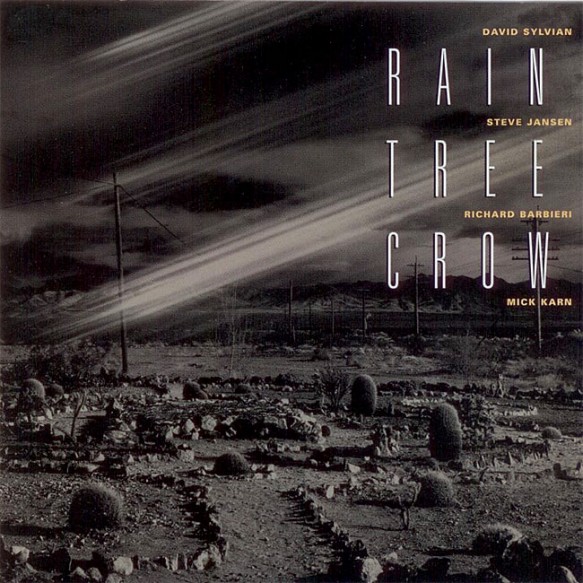
Rain Tree Crow by Rain Tree Crow
10 years later the original members of Japan get together to reassess, for a last time, their fascinating, arty soundscapes
No Place Like Home by Big Country
The production lets our former Scottish guitar heroes down with this one. “We’re Not in Kansas” and “Republican Party People” sound okay but could have been bigger and bolder. In fact, the former would be re-recorded for a later album, Buffalo Skinners, and sounds much better there. “Beautiful People” is the stand-out on an overall disappointing album.
Blow Up by The Smithereens
The Smithereens wear their mid-sixties rock ‘n’ roll hearts on their sleeves. Often they recycle the usual (Beach Boys, Beatles) through their own 4-guitar attack. But to dismiss the Smithereens as mere revivalists would be wrong. The band’s unshakable devotion to the possibilities of the guitar quartet is vindicated by the massive modern-day crunch captured in numbers like “Girl in Room 12.” The Smithereens have never released a bad record and Blow Up, although not their best, is still a collection of catchy, blue-collar power pop.


Blood by This Mortal Coil
This Mortal Coil was a British music collective led by Ivo Watts-Russell, founder of the British record label 4AD. Although Watts-Russell and John Fryer were the only two official members, the band’s recorded output featured a large rotating cast of supporting artists, many of whom were otherwise associated with 4AD, including members of Cocteau Twins, Pixies and Dead Can Dance. Blood is the final TMC album. As always, the covers are brilliantly chosen. Big Star, Spirit, and Syd Barret are the standouts.

1️⃣
Neil Finn continues to prove himself one of the canniest and most gifted melodists around.

Many is the admirer of Crowded House’s last album, Temple Of Low Men, who has scanned the skies anxiously for signs of a follow-up from the Australian-based band. Three years on the wait is over, and Woodface’s 14 songs comfortably match the beguiling pop/rock beauty of its forerunner.
The trio, led by chief songwriter Neil Finn, has now added Neil Finn’s brother Tim Finn (they were last together in the New Zealand art-rockers Split Enz), and the siblings’ gifts for tunesmithery seem as seamlessly compatible as their creamy vocal harmony.
Crowded House’s virtues lie with what is so often called the classic pop song-the kind of writing that can claim descent from John Lennon and Paul McCartney’s work in the late ’60s intricately layered melody, bittersweet and wistful, like Four Seasons In One Day, or sardonic, such as the single Chocolate Cake. These songs, you feel, are timeless, and have come to stay.
2️⃣
Tom Petty repeats the Full Moon Fever formula and produces a similar sounding set of glossy pop/rock tunes – but I love it!

Into the Great Wide Open started out as potentially another Tom Petty solo record, but it eventually became a full-scale collaboration with his longtime backup band, the Heartbreakers. This shift in Petty’s conception of the album enabled him to combine the unduplicable power of a long-standing band of rock & roll confederates with the new directions he has pursued with Jeff Lynne, the new album’s co-producer and Petty’s fellow Traveling Wilbury.
In its best moments, the result sounds like a cross between Full Moon Fever and Damn the Torpedoes and features the most focused and resonant lyrics Petty has ever written.
Employing spare, deceptively simple rhymes in attractive pop settings, Petty sings about the failings, compromises and existential emptiness that underlie the American dream as it staggers, violent and overfed, into the Nineties. His characters range from the compulsive materialists of All the Wrong Reasons to the rocking and rolling Hollywood hotshots of Into the Great Wide Open.
Books, films, the Record Collector, and Albums of the Month are sponsored by:


“Out on the road for forty days, Last night in Little Rock put me in a haze” We’re an American Band by Grand Funk Railroad (1973)
These bands were born in 1991


These guys would turn out to be one of my favourite bands of the 90s. Grant Lee Buffalo was an American rock band based in Los Angeles, California, United States, consisting of Grant-Lee Phillips (vocals and guitar), Paul Kimble (bass) and Joey Peters (drums).
All three were previously members of another Los Angeles band, Shiva Burlesque.
In the late 80s, Jeffrey Clark, Grant-Lee Phillips, James Brenner and Joey Peters formed Shiva Burlesque. They released two studio albums, the self-titled Shiva Burlesque in 1987, and a follow-up (and final) album, Mercury Blues, which was released in 1990 on Fundamental Records. At this point Paul Kimble had replaced Brenner on bass guitar.

Matt Snow in Q Magazine highlighted the Doors and Echo and the Bunnymen as references and described the last album as “great late-night un-easy listening.”
Not helping Shiva Burlesque’s cause was their inability to fit in with the reigning hair metal and punk scenes of late-’80s Los Angeles. So they called it quits.
Phillips, Kimble, and Peters continued as Grant Lee Buffalo, and Clark went solo with cellist Greg Adamson and Brenner on board.

Phillips, Kimble, and Peters transitioned from Shiva Burlesque’s more psychedelic and experimental sound to create something unique. Grant-Lee Phillips, the creative force in the band, brought with him a unique voice that could be both hauntingly gentle and powerful, paired with a somber storyteller’s honesty. This combination would form the core of Grant Lee Buffalo’s identity.
The band’s early influences were a mix of 70s rock, folk, and country, but it was Phillips’ fascination with American history, landscapes, and personal narratives that shaped the band’s lyrical direction. Their sound was further characterized by the use of unconventional instruments and experimental recording techniques, which allowed them to create a distinct atmosphere in their music.
Deep Blue Something is an American rock band, known for the 1995 hit single “Breakfast at Tiffany’s” from their second album Home.
The group was founded in 1991 in Denton, Texas, by brothers Todd and Toby Pipes, then students at the University of North Texas. The brothers enlisted drummer John Kirtland and guitarist Clay Bergus. Deep Blue Something originally performed as Leper Messiah, after the line from David Bowie’s “Ziggy Stardust.”
They would eventually break-up in 2001, but reformed in 2104, continuing to this day.

Next month


and


13th

at the HIBERNIAN CLUB, Fulham, London

“Hyped up as band with The Clash attitude – played a short but powerful 35 minutes set“

17th

Donington Park Racetrack, Leicestershire, England


“AC/DC played a blinding two hour show. Metallica did a great sixty minutes set, playing tracks from the soon to be mega new self-titled album. Motley Crue a messy sixty minutes set“
19th

Harlesden, London
The


“Another great Godfathers show!”
22nd

at
Wembley Arena, London

“Mega two hour arena show“
28th
At the Town & Country Club, London

+

“This was a by invite show only“
31st

+ Skid Row (support)
“First (and only) G & R UK show for three years. Superb 2hours 15 minutes set“
U.K.
the
Official Chart

7 July 1991 – 13 July 1991
1.
(EVERYTHING I DO) I DO IT FOR YOU – BRYAN ADAMS [Last Week: 2, Peak: 1, Weeks: 3]

2.
ANY DREAM WILL DO – JASON DONOVAN [LW: 1, Peak: 1, Weeks: 4]

3.
YOU COULD BE MINE – GUNS N’ ROSES [LW: New, Peak: 3, Weeks: 1]

4.
CHORUS – ERASURE [LW: 3, Peak: 3, Weeks: 3]

5.
THINKING ABOUT YOUR LOVE – KENNY THOMAS [LW: 5, Peak: 4, Weeks: 7]

6.
ALWAYS THERE – INCOGNITO FEATURING JOCELYN BROWN [LW: 9, Peak: 6, Weeks: 3]
7.
RUSH RUSH – PAULA ABDUL [LW: 7,Peak: 7,Weeks: 4]

8.
7 WAYS TO LOVE – COLA BOY [LW: 17, Peak: 8, Weeks: 2]

9.
NOW THAT WE’VE FOUND LOVE – HEAVY D AND THE BOYZ [LW: 30,Peak: 9,Weeks: 2]

10.
I WANNA SEX YOU UP – COLOR ME BADD [LW: 4,Peak: 1,Weeks: 9]


7 July 1991 – 13 July 1991
1.
LOVE HURTS – CHER [Last Week: 1, Peak: 1, Weeks: 3]

2.
GREATEST HITS – THE JAM [LW: New entry, Peak: 2, Weeks: 1]

3.
OUT OF TIME – R.E.M. [LW: 2, Peak: 1, Weeks: 17]

4.
HEY STOOPID – ALICE COOPER [LW: New Entry, Peak: 4,Weeks :1]

5.
SEAL – SEAL [LW: 5, Peak: 1, Weeks: 7]

6.
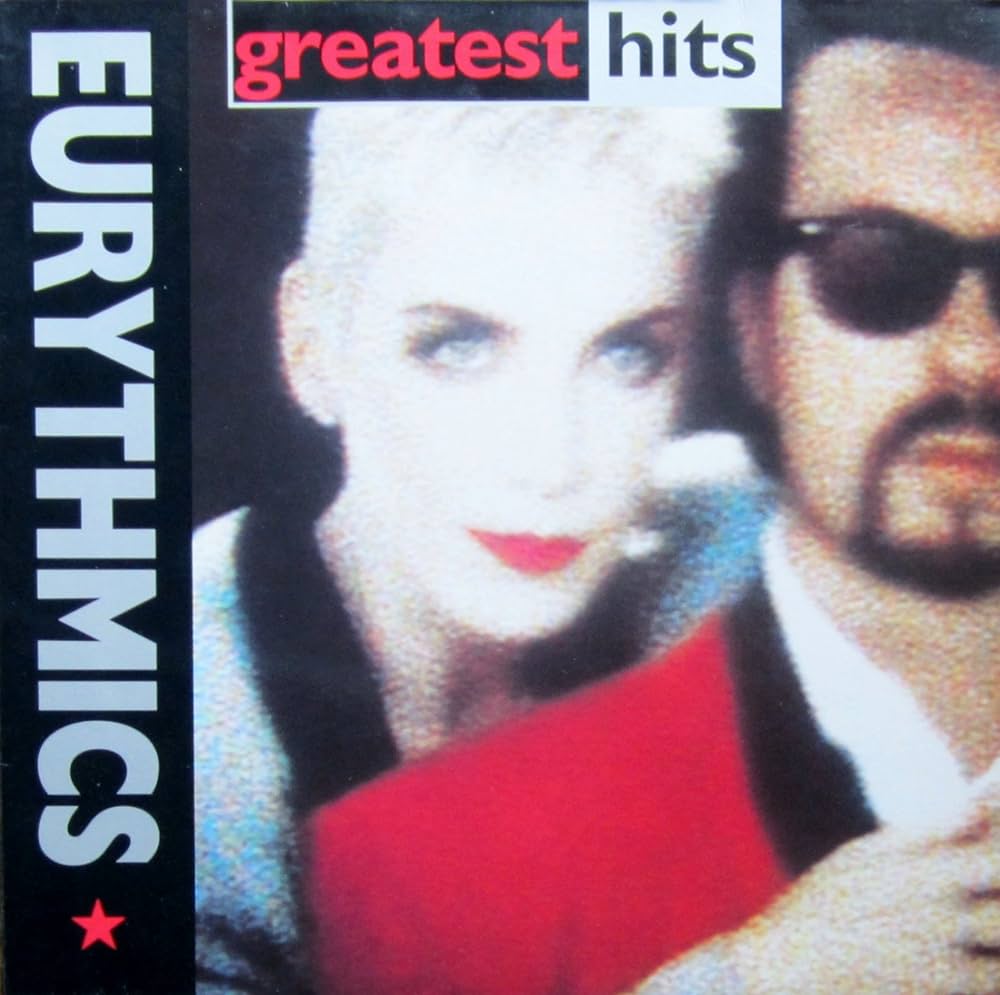
GREATEST HITS – EURYTHMICS [LW: 3, Peak: 1, Weeks: 16]
7.
GREATEST HITS 1977-1990 – THE STRANGLERS [LW: 4,Peak: 4,Weeks: 30]

8.
SOME PEOPLE’S LIVES – BETTE MIDLER [LW: New Entry, Peak: 8, Weeks: 1]

9.
VAGABOND HEART – ROD STEWART [LW: 8, Peak: 2, Weeks: 15]

10.
BEVERLEY CRAVEN – BEVERLEY CRAVEN [LW: 6, Peak: 3, Weeks: 9]

This month it’s the turn of Trevor Pape and the records that shaped him

Trevor Pape
The Beatles – 1962 to 1966, Joe Jackson – Look Sharp, The Doors – The Doors, Led Zeppelin – Led Zeppelin 2, Mike Oldfield – Tubular Bells, Jean Michel Jarre – Oxygene, Deep Purple – Made in Japan, Talking Heads – Remain in Light, The Smiths – The Queen is Dead, Pink Floyd – Dark Side of the Moon.

Black Sabbath – Black Sabbath, Kraftwerk – Autobahn, New Order –Power, Corruption & Lies, The Who – Live at Leeds, R.E.M. – Murmur, David Bowie – Scary Monsters, The Clash – London Calling, UB40 – Signing Off, Van Morrison – Astral Weeks.
Advertisments

The guitar is classified as a chordophone, meaning the sound is produced by a vibrating string stretched between two fixed points.

Historically, a guitar was constructed from wood, with its strings made of catgut. Steel guitar strings were introduced near the end of the nineteenth century in the United States, but nylon and steel strings became mainstream only following World War II.

The guitar’s ancestors include the gittern, the vihuela, the four-course Renaissance guitar, and the five-course baroque guitar, all of which contributed to the development of the modern six-string instrument.

Electric guitars, first patented in 1937, use a pickup and amplifier that made the instrument loud enough to be heard, but also enabled manufacturing guitars with a solid block of wood, without needing a resonant chamber.
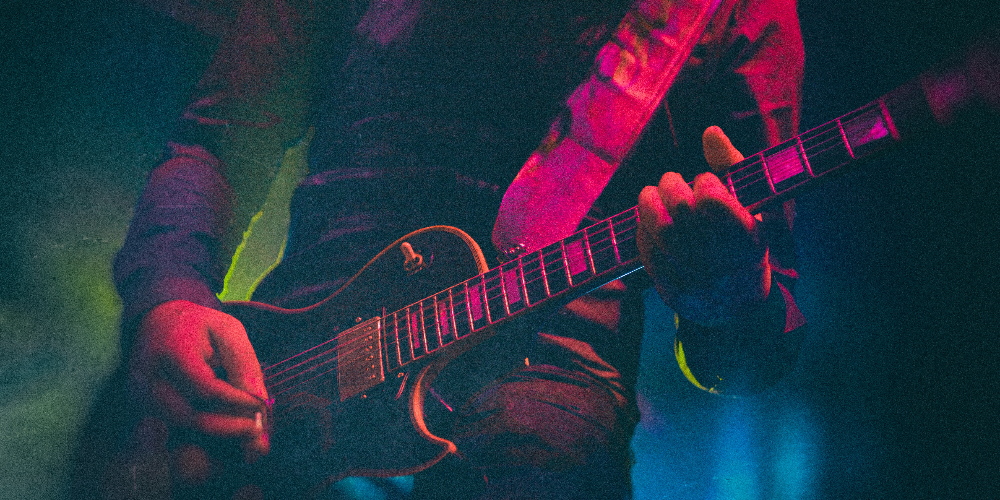
A wide array of electronic effects units became possible including reverb and distortion (or “overdrive”). Solid-body guitars began to dominate the guitar market during the 1960s and 1970s; they are less prone to unwanted acoustic feedback. As with acoustic guitars, there are a number of types of electric guitars, including hollowbody guitars, archtop guitars (used in jazz guitar, blues and rockabilly) and solid-body guitars, which are widely used in rock music.

The loud, amplified sound and sonic power of the electric guitar played through a guitar amp have played a key role in the development of blues and rock music, both as an accompaniment instrument (playing riffs and chords) and performing guitar solos, and in many rock subgenres, notably heavy metal music and punk rock.
The electric guitar has had a major influence on popular culture. The guitar is used in a wide variety of musical genres worldwide.
It is recognized as a primary instrument in genres such as blues, bluegrass, country, flamenco, folk, jazz, jota, ska, mariachi, metal, punk, funk, reggae, rock, grunge, soul, acoustic music, disco, new wave, new age, adult contemporary music, and pop, occasionally used as a sample in hip-hop, dubstep, or trap music.
Next month in the

issue of Rewound
Will my U.K. visa be extended?
Does Bryan Adams extend his stay at number one on the singles charts?
What does this writer and Sacha Baron Cohen have in common?
Plus… news, sport, music, you know, the usual nonsense.




Leave a Reply