


FWiW-92
Welcome to the 6th edition of my very own ‘magazine.’ In it, I put all the stuff that I loved back then. Which was:
Music. Cricket. Books. Manchester United. Films. Sport. Getting drunk. Girls.
You’ll find most of these in this edition.
Especially cricket, as it’s June in England, and the start of the test match season. The mighty Windies are in town and taking on England.
Of course, I was living and playing cricket in Ireland at the time – Donaghadee, Northern Ireland, to be exact. So, my view of the world had somewhat altered from what I had been used to back in the southeast corner of Johannesburg, South Africa.
Enjoy


With thanks to the following publications, streaming services, and websites for their help with this issue. I couldn’t have done this without them:

Wikipedia, AllMusic, Mojo, NME, Uncut, GoodReads, Rotten Tomatoes, Pitchfork, Q, Far Out, Rolling Stone, Album of the Year, The Great Rock Discography, All-Time Top 1000 Albums (Colin Larkin), Spotify, Apple Music, ESPN Cricinfo.com, YouTube, 1001 Albums You Must Hear Before You Die (Robert Dimery), IMDb, On This Day.Com, Historic-newspapers.co.uk.


Stop Me if You Think You’ve Heard This One Before
Celtic Soul
News
Test Cricket Part 1
The Wisden Trophy
U.S. Open Golf
Test Cricket Part 2
Wisden Cricket Monthly
Glastonbury ’91
Books of the Month
Cinema
1991’s 1001 Songs You Must Here Before You Die…
The Record Collector
including THE ALBUM of the MONTH!!
Official UK Charts
Play CRICKET, will TRAVEL


“Tear the roof off, we’re gonna tear the roof off the mothersucker” Give up the Funk (Tear the Roof Off the Sucker) by Parliament (1975)

At the end of May, my work at the Donaghadee Garden Centre came to an end. In addition to my potting and planting skills not quite being up to scratch, the full-time person had returned from his three-month sabbatical in the States. I was now surplus to requirements and needed to find something else in a hurry.
Enter Morrison & McEvoy Roofing of Donaghadee.
Robert Morrison and Raymond McEvoy, the esteemed owners of said company, needed a skivvy. I was their man.

I loved working for them – it was one of the highlights of my year abroad. They were extremely funny, and we laughed a lot, usually at my expense.
The craic (as they say in Ireland) was always good, even if we were supposed to be working.

craic/pronounced krak/an Irish noun
enjoyable social activity; a good time.
“he loves the craic, the late nights“
Gareth Boal, a more qualified apprentice, occasionally also worked with us. Gazzie, as they called him, was studying at university, and they called on him for the bigger jobs if he was available. Things were even funnier when Gareth was around. It also offered some respite for me, from being the constant butt of most jokes.
I recently made contact again with Raymond via Facebook. He tells me this about Gareth:
“Gazzie went on to be a teacher and became head of history at Strangford College. We still see him regularly as he lives in Ballyholme. One of his sons is a first-class rugby player and currently playing for Ulster under 21′s”

What did my work for Morrison & McEvoy entail?
Well, let me tell you.
I would drive to Raymond’s house early in the morning and join him for a coffee in his large, warm Donaghadee home. Ray was also a musician. He played guitar and loved his music. We were kindred spirits. Most nights, he would head outside to his home studio in the back garden and record some new tracks. So, in the morning, over our coffees, he would play me whatever he had been working on the night before.
Around 8 am, we would hop in the company’s rusty red truck and head over to Robert’s house in nearby Bangor to pick him up.

It would almost be 9 am when we got to most sites.
My job was to unpack the truck, get the ladders ready, and then carry items for that particular job onto the roof. Often (if it was a flat bitumen type roof), it was one of those gigantic gas bottles I would have lugged over my shoulder and then carried up the ladder onto the faded silver of the roof.

Now would be a good time to tell you I am very uncomfortable with heights. I was awkwardly close to being terrified, especially coming back down the ladder!!
This is what the Irish boys looked forward to every day I was there. My shaking body edged nervously past the second floor and then over the gutter, and a wobbly stumble onto where the day’s work would be done. The pair (Gareth mostly carried up when he was around) would be rolling in the street below at my anguished grunts and girly squeals as I made my way heavenward.
Coming back down was even worse, as I said!
By 10 o’clock, I’d have most of the stuff up, and soon after we’d break for tea.

My job was mainly to carry everything up (and down) and clean up the site afterwards. I painted many Belfast bitumen rooves a shiny silver.
Some days, we didn’t seem to work much, a few hours at most. We had many long lunches perched up high with plenty of craic. Before I knew it, I was bringing shit down again. By four o’clock, we were usually in the red lorry chugging our way back to the ‘Dee.
Of course, the weather made some days impossible to work – or just plain miserable. I did my time trying to assist in closing a gaping wound in someone’s roof while a freezing wind blew off the Irish Sea, often accompanied by a lovely Irish mist/drizzle.

“Ladies and gentlemen, I give you, Celtic Soul Brothers and the Strong Devoted” The Celtic Soul Brothers by Dexys Midnight Runners (1982)
I asked Raymond McEvoy recently if he was still doing music and playing guitar.
“Yes Mark, it’s still a big thing with me. I’m still recording stuff and also playing live with Celtic Soul. We are a seven piece band that plays all the music of Van Morrison.“

celticsoul.co.uk
The definitive and highly acclaimed tribute to the music of Sir Van Morrison

Celtic Soul is dedicated to performing the music of Van Morrison, with a focus on capturing the nuances of his various influences. Their performances incorporate elements of gospel, soul, skiffle, blues, jazz, folk, and rock, reflecting the diverse influences in Morrison’s music.

They have gained critical acclaim and a loyal following for their performances, including sold-out shows at venues like Belfast’s Ulster Hall and Dublin’s Sugar Club. Celtic Soul continues to perform regularly, with events in venues across Ireland.
Unfortunately, the group suffered a blow when they lost Clarke Wilson (vocals and saxophone) earlier this year. Clarke had a stroke late in 2024 and then sadly passed away at the dawn of 2025. RIP Clarke.

The remaining lineup is Ray McEvoy (electric guitar), Marcus McAuley (acoustic guitar), Rik Gay (drums), Keith Ward (piano and keyboards), Gerry McClurg (trumpet), and Mark Crockard (electric and double bass).
Recently, I read that they had found themselves a new vocalist, a dude called Al McKelvey.


“The streets are empty, and your mother’s gone, The girls are crying, it’s been oh so long, And your father’s calling, come on home” Belfast Child by Simple Minds (1989)

3 June
Three IRA gunmen in Northern Ireland are killed by the British Army. One of the men killed is Peter Ryan who had been on the run for ten years after escaping from a prison in Belfast.

🌋
In Japan Mount Unzen erupts, and the resulting pyroclastic flow kills 46 people.


5 June
In South Africa, the laws that racially segregated places of residence and employment are repealed.

10 June
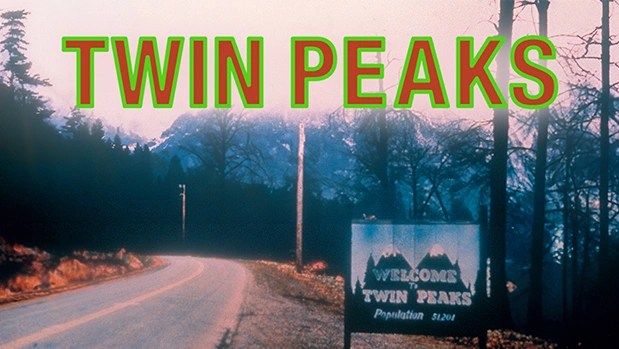
The final episode of “Twin Peaks” airs on ABC-TV.
Twin Peaks is an American surrealist mystery-horror television series created by Mark Frost and David Lynch. It premiered on ABC on April 8, 1990, and ran for two seasons until its cancellation in 1991.
Set in the fictional Pacific Northwest town of Twin Peaks, the series follows an investigation led by FBI special agent Dale Cooper (Kyle MacLachlan) into the murder of local teenager Laura Palmer (Sheryl Lee). The show’s narrative draws on the characteristics of detective fiction. Still, its uncanny tone, metaphysical elements, and campy, melodramatic portrayal of eccentric characters also draw from American soap operas and horror tropes. Like much of Lynch’s work, it’s distinguished by surrealism, distinctive cinematography, and offbeat humour.
The musical score was composed by Angelo Badalamenti and David Lynch.
The show returned in 2017 for a third season on Showtime.
On the same day…
In Meyers, California, 11-year-old Jaycee Lee Dugard is kidnapped while leaving school. She will not be found for eighteen years! They took her in 1991, a 4-foot, 6-inch fifth-grader walking to school in a pink windbreaker and pink stretch pants.

For 18 years, police said, a convicted rapist and his wife, kept Jaycee Lee Dugard hidden in their Antioch, California, backyard, living in a tent or shed – away from the legions of law officers searching for her.

Over the years, authorities said, her abductor – Phillip Craig Garrido, 58 – impregnated her twice and she gave birth to two girls, now 15 and 11.
This is the horrifying ordeal law enforcement officials described yesterday after revealing that – Ms. Dugard, now 29, had been found safe after all these years and reunited with her mother yesterday.
“She was in good health, but living in a backyard for 18 years does take its toll,” said El Dorado County Undersheriff Fred Kollar.
11 June
Natalie Cole releases “Unforgettable…with Love,” covering her father’s standards including a “virtual duet” of title track; she later wins six Grammy Awards, including Album of the Year, 1992.
🌩
13 June
A spectator at the US Open golf is struck by lightning and killed
15 June
Mount Pinatubo in the Philippines erupts in the second-largest terrestrial eruption of the 20th century. 800 people die as a result.

🥳
17 June
Mark Wilson turns 25 years old while living in Donaghadee, Northern Ireland. He has no recollection of what he did on the day – although the possibilities of Guinness being involved are extremely high.

18 June
“(Everything I Do) I Do It for You” single released by Bryan Adams (Billboard Song of the Year, 1991)
19 June
Pablo Escobar, the infamous leader of the Medellín Cartel, surrendered to Colombian authorities. He negotiated a deal with the government that allowed him to be imprisoned in his self-built prison, La Catedral, and avoided extradition to the United States. This surrender was short-lived, as Escobar escaped in 1992 when authorities attempted to transfer him to a more standard facility.

28 June
The Greater Los Angeles Area is hit by the Sierra Madre earthquake. Two people die and up to 40 are injured.

“There is no hope, no reasoning, This rainy day in June, And everybody felt the rain (Everybody felt the rain)” Rainy Day in June by The Kinks (1966)

in England means it’s time for

These were the days when South African sportsmen and women were still paying the price of the national party’s Apartheid policies. International sanctions had pretty much ended our participation in world sport.
So, many of our local heroes had gone to seek greener pastures in places like English country cricket and, if they were good enough, a qualification to play for their adopted country. Two of these were Allan Lamb (from Cape Town) and Robin Smith (from Durban) who in the summer of ’91, would both be in action for England against the mighty West Indians.

One of the benefits of living in Ireland that year was the easy access I had to the BBC Radio services. I listened mainly to music stations and the live test cricket commentary they delivered with such eloquence.
I savoured every moment possible – even listening to the radio guys while watching the test match on television (with the sound down!). Many people do/did this.
People in England still watch live test cricket with the Test Match Special team supplying info and general entertainment through those rather daft-looking dongles attached to one of their ears.

Test Match Special is a British sports radio programme that initially only covered test match cricket. Up until 1992, it could be listened to on BBC 3’s medium wave frequencies. It then moved to Radio 3 FM.
Calypso-tinged theme music from the track “Soul Limbo” by the American soul band Booker T. & the M.G.’s is played at the beginning and end of TMS coverage.

Puts me in such a good mood when I hear this tune – Sitting with my dad watching cricket on a black and white telly (Lynne David)
My favourite TMS commentators include Christopher “CMJ” Martin-Jenkins, Brian ” Johnners” Johnston, Henry “Blowers” Blofeld and Jonathan “Aggers” Agnew. Then, there was Bill “the Bearded Wonder” Frindall, a scorer extraordinaire, who offered up an impressive array of stats when asked by the team. Agnew debuted in 1991, so he was still a novice when I first heard him. He has an excellent cricket voice and is still active today!

Test Match Special has always had a distinctively irreverent style. While it takes seriously its role of describing and commenting on the action, there is also much light relief. This is what I most loved about it through the summer of ’91.
Brian Johnston, who was as happy on the stage and working in light entertainment presentation as he was in the commentary box, was the master of this style.
This often leads to hilarity in the box, for instance on one occasion in August 1991 at The Oval when Ian Botham was dismissed “hit wicket” and Agnew said Botham “just couldn’t quite get his leg over.” This remark led both Agnew and Johnston to collapse in a fit of giggles, which was quickly followed by Johnston’s giggly chastening, “Aggers, do stop it!”
This clip has become a broadcasting classic and is frequently replayed. In 2005, Radio 5 Live listeners voted it the greatest sporting commentary of all time, with ten times as many votes as “they think it’s all over.”
Do yourself a favour and give it a listen to the end.
I loved

back in the day
“This knife of Sheffield steel, This is England, This is how we feel” This is England by The Clash (1985)

The Wisden Trophy


England v West Indies at Headingley, Leeds

First test of a 5-match series (test no. 1171 of all time)
England: Graham Gooch (captain), Mike Atherton, Graeme Hick, Allan Lamb, Mark Ramprakash, Robin Smith, Jack Russell (wk), Derek Pringle, Phil DeFreitas, Steve Watkin, Devon Malcolm.
Mark Ramprakash, Graeme Hick, and Steve Watkin made their debuts.

West Indies: Phil Simmons, Desmond Haynes, Richie Richardson, Carl Hooper, Viv Richards (captain), Gus Logie, Jeff Dujon, Malcolm Marshall, Curtly Ambrose, Courtney Walsh, Patrick Patterson.

The umpires were Dickie Bird and David Sheppard (both of England)
West Indies won the toss and elected to field first
Match Summary:
England 198 all out (Robin Smith 54, Graham Gooch 34) (Malcolm Marshall 3 for 46, Patrick Patterson 3 for 67)
West Indies 173 all out (Viv Richards 73, Phil Simmons 38) (Phil de Freitas 4 for 34, Derek Pringle 2 for 14, Steve Watkin 2 for 55)
England 252 all out (Graham Gooch 154 not out, Mark Ramprakash 27, Derek Pringle 27) (Curtly Ambrose 6 for 52, Malcolm Marshall 3 for 58)
Leaving the Windies chasing a target to win of 278 …
West Indies 162 all out (Richie Richardson 68) ( Phil De Freitas 4 for 59, Steve Watkin 3 for 38, Derek Pringle 2 for 38)
England beat the West Indies by 115 runs.
Attendance: 46,325; receipts £565,000.
Player of the match: Graham Gooch


“Although no praise could be too lavish for Gooch, DeFreitas, too, took a prominent role. His match figures of eight for 93 rewarded admirable control and impressive accuracy. Inevitably, as 40 wickets fell for only 785 runs, the pitch attracted a good deal of comment, not all favourable, and batting was never comfortable.”
John Callaghan


👇
https://www.espncricinfo.com/story/england-v-west-indies-1991-153165

20 – 24 June
2nd test: England v West Indies at Lords, London.


England: Unchanged from the 1st test
West Indies: Ian Allen, making his test debut, replaced the injured Patrick Patterson
The umpires were: Barrie Meyer and Ken Palmer (both of England)
West Indies again won the toss but this time elected to bat
Match summary:
West Indies 419 all out (Carl Hooper 111, Viv Richards 63, Desmond Haynes 60)(Derek Pringle 5 for 100)
England 354 all out (Robin Smith 148 not out)(Curtly Ambrose 4 for 87)
West Indies 12 for 2
The Saturday and Sunday of the match was then washed out due to heavy rain.
☔
Match drawn
Attendance: 106,232; receipts £1,805,213.
Man of the match: Robin Smith
“The full house which gathered on Saturday morning must have done so with trepidation; it was clearly possible that they would witness the end of the game. And they might have done so if Logie had held on to a sharp catch at short leg before Smith had added to his overnight 23. It was the last chance he would offer in an innings which bestrode the sunny day as few others can have on the Lord’s Saturday. He received appreciable support from Russell, Pringle and DeFreitas, and when the last man, Malcolm, gave a fourth wicket to Ambrose, Smith was undefeated at his highest Test score after almost seven hours of graphic concentration. Moreover, England were only 65 runs behind. Smith had faced 271 balls and he hit twenty fours in his 148 not out.”
Alan Lee
👇
https://www.espncricinfo.com/story/england-v-west-indies-1991-153166

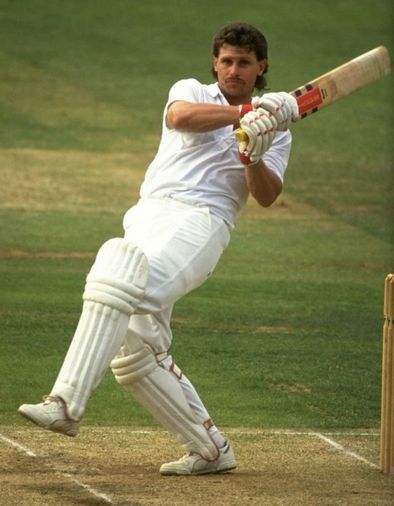
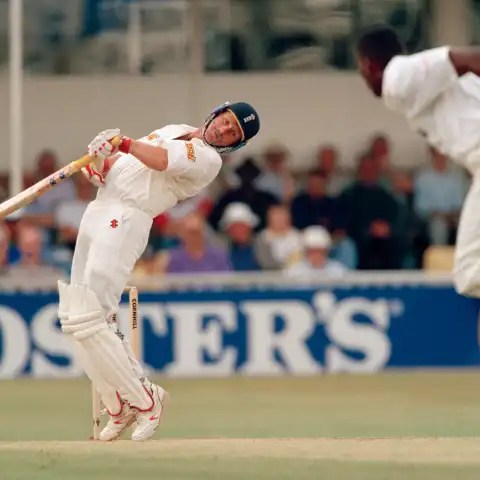

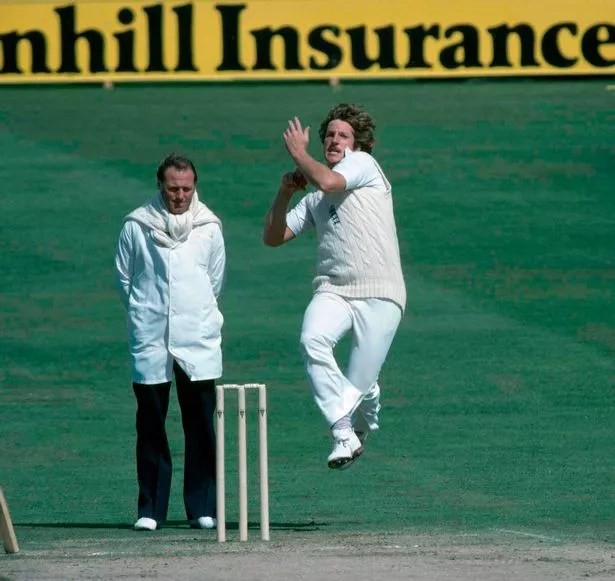
Clockwise from top left: Graham Gooch, Robin Smith, Viv Richards, Ian Botham, Robin Smith
“You know, the Oscar I was awarded for The Untouchables is a wonderful thing, but I can honestly say that I’d rather have won the U.S. Open Golf Tournament.” Sean Connery

The United States Open Championship, commonly known as the U.S. Open, is the annual open national championship of golf in the United States. It is the third of the four men’s major golf championships, and is on the official schedule of both the PGA Tour and the European Tour. Since 1898 the competition has been 72 holes of stroke play (4 rounds on an 18-hole course), with the winner being the player with the lowest total number of strokes.

The 1991 event was the 91st U.S. Open, held June 13 – 17 at Hazeltine National Golf Club in Chaska, Minnesota, a suburb southwest of Minneapolis.

Play was interrupted during the first round due to a severe thunderstorm. Six people were struck by lightning while seeking shelter near the 11th tee, and one person was killed.

American Payne Stewart held the lead through each of the first three rounds, but in the final round he found himself trailing fellow American Scott Simpson by a stroke heading to the 18th.

Simpson hit his drive into the rough and could only manage a bogey to Stewart’s par, forcing an 18-hole playoff. Both players shot a final-round 72 to finish at 282 total, three shots clear of Larry Nelson and Fred Couples.
In the 18-hole playoff, Simpson led by two-strokes heading to the 16th. He then bogeyed the hole, however, while Stewart made birdie to even up the contest. At the par-3 17th, Simpson found the water on his tee shot and recorded another bogey, giving Stewart a one-shot advantage. Simpson then made bogey on the 18th while Stewart made a par, giving Stewart a two-stroke win and the championship.

Payne Stewart’s winning score in the playoff of 75 was the highest since Tommy Armour won with a 76 in 1927. It was the second of Stewart’s three major championships.
This event also saw the final U.S. Open appearance for two-time champion Lee Trevino.
Phil Mickelson* won low-amateur honors for the second consecutive year, finishing in 55th place.
*[Ironically, Mickelson has claimed that this year’s U.S. Open would be his last – 34 years later. He would never win that major, but finished 2nd on six occasions.]
| T1 | Payne Stewart | 67-70-73-72=282 | −6 | Playoff |
| Scott Simpson | 70-68-72-72=282 | |||
| T3 | Fred Couples | 70-70-75-70=285 | −3 | 62,574 |
| Larry Nelson | 73-72-72-68=285 | |||
| 5 | Fuzzy Zoeller | 72-73-74-67=286 | −2 | 41,542 |
| 6 | Scott Hoch | 69-71-74-73=287 | −1 | 36,090 |
| 7 | Nolan Henke | 67-71-77-73=288 | E | 32,176 |
| T8 | Raymond Floyd | 73-72-76-68=289 | +1 | 26,958 |
| José María Olazábal | 73-71-75-70=289 | |||
| Corey Pavin | 71-67-79-72=289 |

William Payne Stewart (January 30, 1957 – October 25, 1999) was an American professional golfer who won 11 PGA Tour events, including three major championships, the last of which came just a few months before his death in an airplane accident at the age of 42.


“A room without books is like a body without a soul” Marcus Tullius Cicero

of the month
Jung Chang (Chinese: 張戎) is a Chinese-British writer now living in London, best known for her family autobiography Wild Swans, selling over 10 million copies worldwide but banned in the People’s Republic of China.

The story of three generations in twentieth-century China blends the intimacy of memoir and the panoramic sweep of eyewitness history. Wild Swans contains the biographies of the author’s grandmother and her mother, and finally her own autobiography. Her grandmother had bound feet and was married off at a young age as the concubine of a high-status warlord. Chang’s mother rose in status as a member of the Communist Party. Chang took part in the Cultural Revolution as a member of the Red Guards, but eventually her father was tortured and she was sent to the countryside for thought reform. Later, she earned a scholarship to study in England, where she still lives.
GoodReads 4.28 (from 113,907 ratings)
Art Spiegelman (born Itzhak Avraham ben Zeev) is New York-based comics artist, editor, and advocate for the medium of comics, best known for his Pulitzer Prize-winning comic memoir, Maus.

Acclaimed as a quiet triumph and a brutally moving work of art, the first volume of Art Spieglman’s Maus introduced readers to Vladek Spiegelman, a Jewish survivor of Hitler’s Europe, and his son, a cartoonist trying to come to terms with his father, his father’s terrifying story, and history itself. Its form, the cartoon (the Nazis are cats, the Jews mice), succeeds perfectly in shocking us out of any lingering sense of familiarity with the events described, approaching, as it does, the unspeakable through the diminutive.
This second volume, subtitled And Here My Troubles Began, moves us from the barracks of Auschwitz to the bungalows of the Catskills. Genuinely tragic and comic by turns, it attains a complexity of theme and a precision of thought new to comics and rare in any medium. Maus ties together two powerful stories: Vladek’s harrowing tale of survival against all odds, delineating the paradox of daily life in the death camps, and the author’s account of his tortured relationship with his ageing father. At every level, this is the ultimate survivor’s tale – and that too of the children who somehow survive even the survivors.

GoodReads 4.42 (from 149,939 ratings)
“Every viewer is going to get a different thing. That’s the thing about painting, photography, cinema” David Lynch
🎬
Now showing at the

A married black lawyer named Flipper (Wesley Snipes) begins an affair with his white secretary Angie (Annabella Sciorra). When the news is leaked through an acquaintance, Flipper’s wife (Lonette McKee) kicks him out of the house. Flipper decides to begin courting his mistress, only to be greeted by disapproval from friends, family and even strangers. The relationship continues to be strained in a society not ready to accept it, and people are hurt during its inception.


Jungle Fever finds Spike Lee tackling timely sociopolitical themes in a typically provocative style, even if the result is sometimes ambitious to a fault. However diffuse the movie’s agenda, it is never less than thoroughly involving.

Nobleman crusader Robin of Locksley (Kevin Costner) breaks out of a Jerusalem prison with the help of Moorish fellow prisoner Azeem (Morgan Freeman) and travels back home to England. But upon arrival, he discovers his dead father in the ruins of his family estate, killed by the vicious sheriff of Nottingham (Alan Rickman). Robin and Azeem join forces with outlaws Little John (Nick Brimble) and Will Scarlett (Christian Slater) to save the kingdom from the sheriff’s villainy.

Robin Hood: Prince of Thieves brings a wonderfully villainous Alan Rickman to this oft-adapted tale, but he’s robbed by big-budget bombast and a muddled screenplay.
The film also has the massive Bryan Adams hit song in it.

📽
When a rich widow, Lilia (Helen Mirren), visits Tuscany with her friend Caroline (Helena Bonham Carter), she falls in love with Gino (Giovanni Guidelli), a poor man. Lilia’s former mother-in-law, Irma (Judy Davis), doesn’t think the marriage is suitable, but she can’t convince Lilia to return to England. When Lilia dies in childbirth, Irma sends her son, Philip (Rupert Graves), to bring the child back, but he encounters multiple obstacles, including his newfound infatuation with Italy.

A film about females overstepping the mark and meddling and how males swept along with it suffer the consequences. That’s the message I took from the film, it was set in a time of major social upheaval in Britain which made me wonder if it was just a coincidence – it’s very well acted and easy on the eye.
🎥
Lt. Frank Drebin (Leslie Nielsen) returns for more madcap high-jinks in this police-procedural spoof.

Critics Consensus
Naked Gun 2 1/2: The Smell of Fear delivers a handful of moderate laughs, but overall, its strained antics pale in comparison to its gut-busting predecessor.
Audience Consensus
A feeble sequel. (Jonathan Rosenbaum, Chicago)
“One good thing about music, when it hits you, you feel no pain.” Bob Marley
1991’s

I seen the arrow on the doorpost
Saying this land is condemned
All the way from New Orleans
To Jerusalem
Well, I travel through east Texas
Where many martyrs fell
And I know no one can sing the blues
Like Blind Willie McTell

Dylan’s greatest ever tribute to the early twentieth-century, Georgia born, vocalist-guitarist. Recorded in 1983, but not heard by fans until much later. Dylan intended it to be on Infidels, which marked his welcome return to secular music. That it didn’t make the cut for that album is hard to fathom.
Whispered about by Dylan-ists for years, “Blind Willie McTell” eventually showed up here in 1991, on The Bootleg Series 1-3.

The work is an uncommon beauty, built on a familiar piano melody from “St. James Infirmary Blues” and filled with exquisite language.

There’s a woman by the river
With some fine young handsome man
He’s dressed up like a squire
Bootleg whiskey in his hand
There’s a chain gang on the highway
I can hear them rebels yell
And I know no one can sing the blues
Like Blind Willie McTell
“Until you buy the vinyl record, you don’t really own the album” Jack White
Yes, I am,
the

🤓
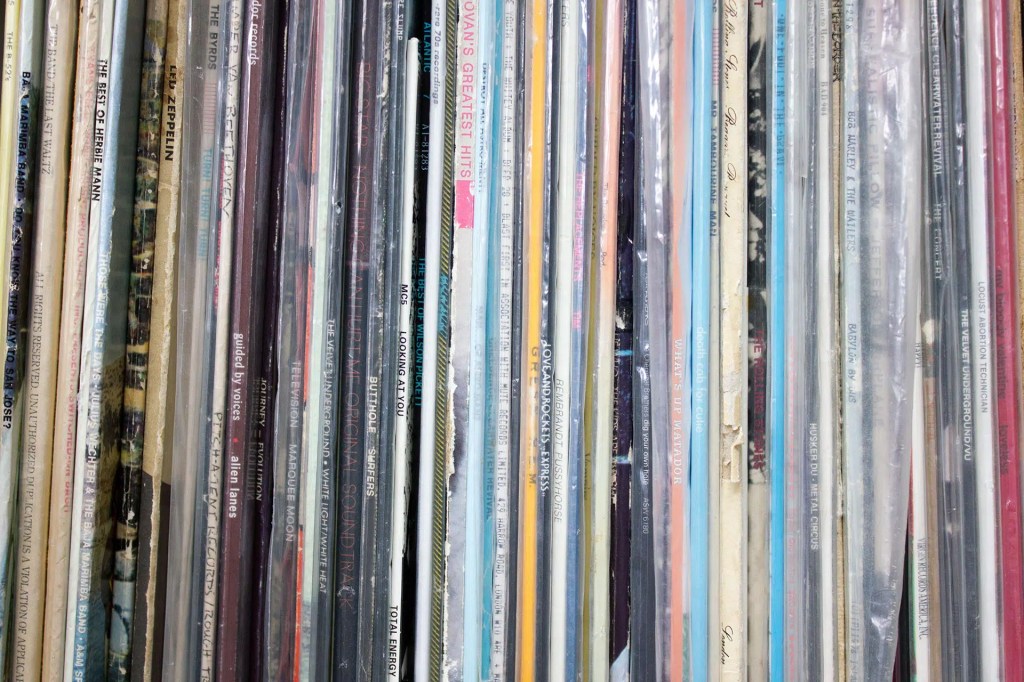
the following June 1991 releases have all found their way into my collection
Electric Landlady by Kirsty Mac Coll
Kirsty MacColl was an English singer and songwriter, daughter of folk singer Ewan MacColl. She recorded several pop hits in the 1980s and 1990s, including “There’s a Guy Works Down the Chip Shop Swears He’s Elvis” and cover versions of Billy Bragg’s “A New England” and the Kinks’ “Days.” Her first single, “They Don’t Know,” had chart success a few years later when covered by Tracey Ullman. MacColl also sang on a number of recordings produced by her then-husband Steve Lillywhite, most notably “Fairytale of New York” by the Pogues.

Electric Landlady is also Kirsty’s most eclectic album. Besides the hip-hop-influenced “Walking Down Madison,” the album version of which comes complete with a guest rap by Aniff Cousins, Electric Landlady also includes the sublime single “My Affair,” MacColl’s first full-fledged foray into Latin music.

Meanwhile, other tracks incorporate African and electronic influences, and to top it off, the closing “The One and Only” reunites MacColl with the Pogues, with whom she had recorded two tracks in the late ’80s. Somehow, all of these disparate influences tie together, united by MacColl’s spellbinding voice and typically excellent songwriting, helped as usual by ex-Hitmen guitarist Pete Glenister and former Fairground Attraction leader Mark E. Nevins.

🎸
Electric Digger Dandy by James Reyne
James Reyne OAM (born 19 May 1957) is an Australian musician. He achieved fame as the lead singer of the band Australian Crawl, and subsequently went on to a successful solo career.

Mindful of the American market (where the album was released under the title of Any Day Above Ground), Electric Digger Dandy included a revamped version of the Australian Crawl hit “Reckless” as well as a cover of John Hiatt’s “Stood Up,” a duet with American singer-songwriter Tony Joe White. Single releases from the album included “Slave” (#10 ARIA Charts), “Any Day Above Ground” and “Some People“.

Reyne expands his musical boundaries with an oddball collaboration with Jim Vallance (of Bryan Adams fame). The result is an invigorated Reyne, who seems to be having a great time winding his voice around gorgeous melodies and intense rants alike. The lyrics have a more subtle edge to them; while they actually seem lighter than those of Reyne’s vitriolic debut.
Overall Digger Dandy finds a more introspective and experimental Reyne; one content to play the music at a lower level and let his words and stiletto voice speak for itself.
🎷
Superstition by Siouxsie and the Banshees (7/10)
One of the most successful post-punk and goth bands of the late 70s and early 80s, evolving from a confrontational art-punk band into a stylish alternative pop unit.

Superstition is a similar album to that of Peepshow, this time with more precise production and a lighter feeling to many of the songs. While Siouxsie and the Banshees albums like Tinderbox and Juju were dark affairs, Superstition’s sound is representative of the pink of the album cover. A softer pop sound, mixed with the Banshees’ penchant for minor keys and strange imagery. They manage to pull it off quite well on most tracks. “Fear (Of the Unknown)” and “Drifter” are classic Siouxsie stuff, and “Kiss Them for Me” gave them their first significant entry into the U.S. singles charts.
“Music is life itself.” Louis Armstrong
Mark’s

is
Levelling the Land by The Levellers
The Levellers formed in 1988, bringing together five Brighton, England musicians – Mark Chadwick (vocals, guitar, banjo), Alan Miles (vocals, guitar, mandolin, harmonica), Jeremy Cunningham (bass, bouzouki), Charlie Heather (drums), and Jon Sevink (fiddle). Forging a pseudo-hippie, slightly punky folk-rock with Celtic flavoring and staunch politics.

This is the bands second album and it would reach number 14 in the UK album charts. In ’91 they were all over BBC Radio and it soon became a must purchase for yours truly. I loved what I heard from the moment I first slipped the CD into my small beatbox in the bedroom of Willy D’s farmhouse in Donaghadee.
They play a punky sort of rabble rousing folk rock music – similar in a way to the Pogues. They’re also have more than a smidgen of Waterboys about them. Mark Chadwick’s singing is of a more strained, higher-pitched Mike Scott – if not as dramatic. The Levellers hearts are certainly in the right place as their music aims for ‘Big and Anthemic‘ crossed with the ‘Authentic and Folky.’
Songs like “The Boatman” (my favourite on the record) suggest Sinéad O’Connor’s hip-hop revamp of “I Am Stretched on Your Grave” was a listening staple in the studio during recording of this album.
The critics generally panned them (🙄) but fans, and especially at festivals, adored them. I am certainly in the latter camp.
Featuring the singles “One Way,” “Fifteen Years” and “Far From Home” along with the anthems “Sell Out” and “Battle Of The Beanfield,” Levelling the Land quickly became the Levellers most famous album, going on to sell over 300,000 copies in the UK alone.

These June 1991 albums have also found there way into my collection over the following years:


New Books, Films and the Album of the Month is sponsored by


Best Albums of 1991: April to June


Electronic – Electronic
The Wonderstuff – Never Loved Elvis
Ned’s Atomic Dustbin – God Fodder
Massive Attack – Blue Lines
Smashing Pumpkins – Gish


“Pop music often tells you everything is OK, while rock music tells you that it’s not OK, but you can change it.” Bono


8 June 1991 – 15 June 1991

Number 1
“I Wanna Sex You Up” by Colour Me Bad was number one on the 8th of June 1991 (it stays there for 3 weeks)

Number2
“Baby Baby” by Amy Grant peaks at number two on the 15th of June (1 week only)

Number 3
After five weeks at #1, Cher begins her tumble back down the single chart

Number4
“Promise Me” by Beverley Craven

Number5
“Holiday” (1991 mix) by Madonna

Number6
“Shiny Happy People” by R.E.M. reached number six on the 15th of June

Number 7
“Light My Fire” (1991 mix) by The Doors

Number8
“Gypsy Woman (La Da Dee)” by Crystal Waters
Number 9
“Shocked” by Kylie Minogue

Number 10
“Thinking About Your Love” by Kenny Thomas

Other
Charting Singles in June ’91

[peak position in brackets]

“Any Dream Will Do” by Jason Donovan [1]
“Do You Want Me” by Salt-N-Peppa [5]
“From a Distance” by Bette Midler [6]
“Only Fools (Never Fall in Love” by Sonia [10]
“Chorus” by Erasure [3]
Entering the charts in June:
“Everything I Do (I Do it For You)” by Bryan Adams [1]
“The Motown Song” by Rod Stewart (10)
Radio, video, boogie with a suitcase
You’re living in a disco
Forget about the rat race
Let’s do the milkshake
Talk about pop music
Talk about pop music

“Somebody was trying to tell me that CDs are better than vinyl because they don’t have any surface noise. I said, “Listen, mate, life has surface noise.” John Peel

In 1991, the UK Album Charts were calculated primarily based on physical album sales data collected from retailers. The Official Charts Company (OCC), jointly owned by the British Phonographic Industry and the Entertainment Retailers Association, compiled the charts. The OCC gathered sales information from retailers through market researchers Kantar. In 1991, the chart reflected sales of physical albums only (CDs, vinyl, cassettes), as streaming and digital downloads were not yet significant factors in chart calculation

The U.K. TOP TWENTY on the 9th of June 1991
- Seal – SEAL
- Fellow Hoodlums – DEACON BLUE
- Out of Time – R.e.M.
- Greatest Hits – EURYTHMICS
- Beverley Craven – BEVERLEY CRAVEN
- Electronic – ELECTRONIC
- Never Loved Elvis – THE WONDERSTUFF
- Love and Kisses – DANII MINOGUE
- Time, Love and Tenderness – MICHAEL BOLTON
- Joyride – ROXETTE
- Real Life – SIMPLE MINDS
- Legend – BOB MARLEY and the WAILERS
- The Very Best Of – DEXYS MIDNIGHT RUNNERS
- Memorabilia: The Singles – SOFT CELL and MARC ALMOND
- Greatest Hits 1977-1990 – The STRANGLERS
- The White Room – KLF
- Please Hammer Don’t Hurt ‘Em – MC HAMMER
- We Are in Love – HARRY CONNICK JR
- Pop Symphonies – JAMES LAST and his ORCHESTRA
- The Doors (OST) – THE DOORS, JIM MORRISON & VARIOUS ARTISTS
How many did you buy of these?
Me?
Seven of them…


Play


will travel
The cricket I played in Ireland was mainly a disappointment to myself and the club that had brought me over. The team itself also struggled, losing more than they won.
As poorly as I had started on the pre-season tour, I continued throughout the season proper. I’d get in, make twenty or thirty-odd runs, and then get out. Sometimes, not even that, as there were a few abject failures too.
One Saturday, in a game against arch-rivals and neighbours Bangor, I managed to get off to a flyer. Four of the first five balls I faced scorched to the boundary for four. Feeling invincible, I went for another big shot on the final ball – but alas – holed out on the third man boundary.
Then, in a match against Academy in the village of Mallusk, I was left stranded on 41, with our side bowled out for 130.
Frustrating to say the least.
The only half-century I made all season came in my last game for the club. The centuries the club hoped I would make sadly never arrived.
The batting wickets early on were especially slow and low. There was none of the quick and bouncy stuff I was used to growing up on the highveld in Johannesburg. I felt the pressure build virtually from the start and grow after each comparative failure. Whenever I batted, I vividly recall being nervous the whole time I was at the crease, never relaxing and just getting on with it.
It was all very disappointing as I knew I was better than I had performed and should have been reeling off the big scores. It’s not like I wasn’t good enough, as I certainly knew I was.
Luckily, I managed to bowl well for most of the season, picking up many handy wickets, including a hat-trick in one game. But it wasn’t for my crafty off-spinners that the club had searched me out. Nor where I wanted desperately to prove myself.
I didn’t keep any records of how played in Ireland. Below are a few of the cutting I sent home to my folks back in Ireland – and a couple of articles from the local rag in Alberton.


At the end of the season the club posted me the club’s batting and bowling averages. Mine did not make for awe-inspiring reading and went something like this:
16 matches – BATTING 412 runs at an average of 27.30 – highest score 51 – BOWLING 33 wickets at an average of 29.00 – best 4 for 34 – CATCHES 22


But, I’m getting ahead of myself a bit here, as there was still plenty happening in my life and beyond that in July 1991.
Until then, see you again

Rewound
Editor Mark Wilson
Editor (One-Shots) Mark Wilson
Reviews Editor Mark Wilson
Contributing Editor Mark Wilson
Senior Designer Mark Wilson
Production Editor Mark Wilson
Senior Sub-Editor Mark Wilson
Picture Editor Mark Wilson
Copy Editor Tania Serfontein
Editor At Large Mark Wilson


Leave a Reply